BJJ Academy Software: The Complete Guide to Choosing the Right Platform
Running a BJJ academy involves far more than teaching technique. Between managing student rosters, collecting payments, scheduling classes, and tracking who actually shows up, the administrative side of the business can consume hours every week. The right software eliminates that burden and gives you data you never had before.
This guide walks you through everything you need to know about BJJ academy management software: what features actually matter, how different platforms compare on the things BJJ owners care about most, and how to pick the right tool for your school's size and budget.
Why BJJ Academies Need Dedicated Software
Generic gym management software works for globo gyms where people scan in, hop on a treadmill, and leave. BJJ academies operate differently. You have belt ranks, stripe promotions, gi and no-gi classes, open mats, competition teams, and kids programs that all run on their own schedules with their own pricing structures. A yoga studio booking app is not going to cut it.
Dedicated BJJ academy software understands your world. It knows that a student who drops from three classes a week to one is at risk of quitting. It can track belt progressions. It handles the fact that your fundamentals class, advanced class, and competition team might each have different enrollment policies. Most importantly, it frees you from the spreadsheet tangle that most academy owners fall into during their first few years.
The financial impact is real. Academy owners who switch from manual processes to dedicated software consistently report saving five to ten hours per week on administration. That is time you can spend coaching, developing curriculum, or simply being present on the mat instead of hunched over a laptop in the back office.
Key Features to Look For
Attendance Tracking
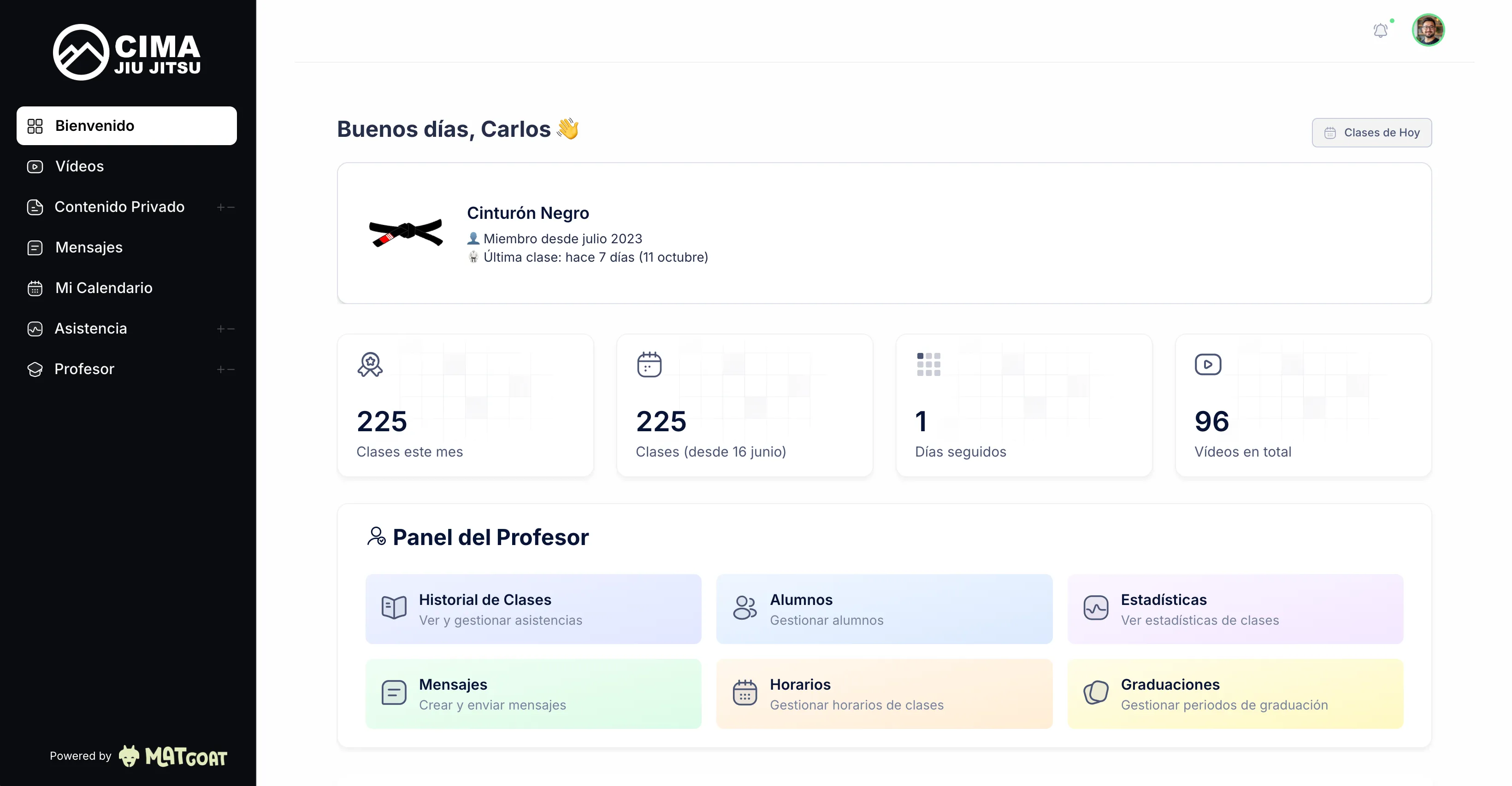
This is the foundation of everything else. Without accurate attendance data, you cannot identify retention risks, reward consistent students, or understand which classes are thriving and which are underperforming. Look for software that offers tablet-based check-in so students can sign themselves in when they arrive. QR code scanning and PIN-based systems both work well. The key is that the process takes less than five seconds so it does not create a bottleneck at the door.
Beyond simple check-ins, the best platforms let you see attendance trends over time. You want to know average classes per student per month. You want to see attendance by class type (fundamentals versus advanced versus competition). You want correlation between attendance frequency and retention. This data is what separates academies that grow steadily from ones that constantly churn through new students.
Payment and Billing Management
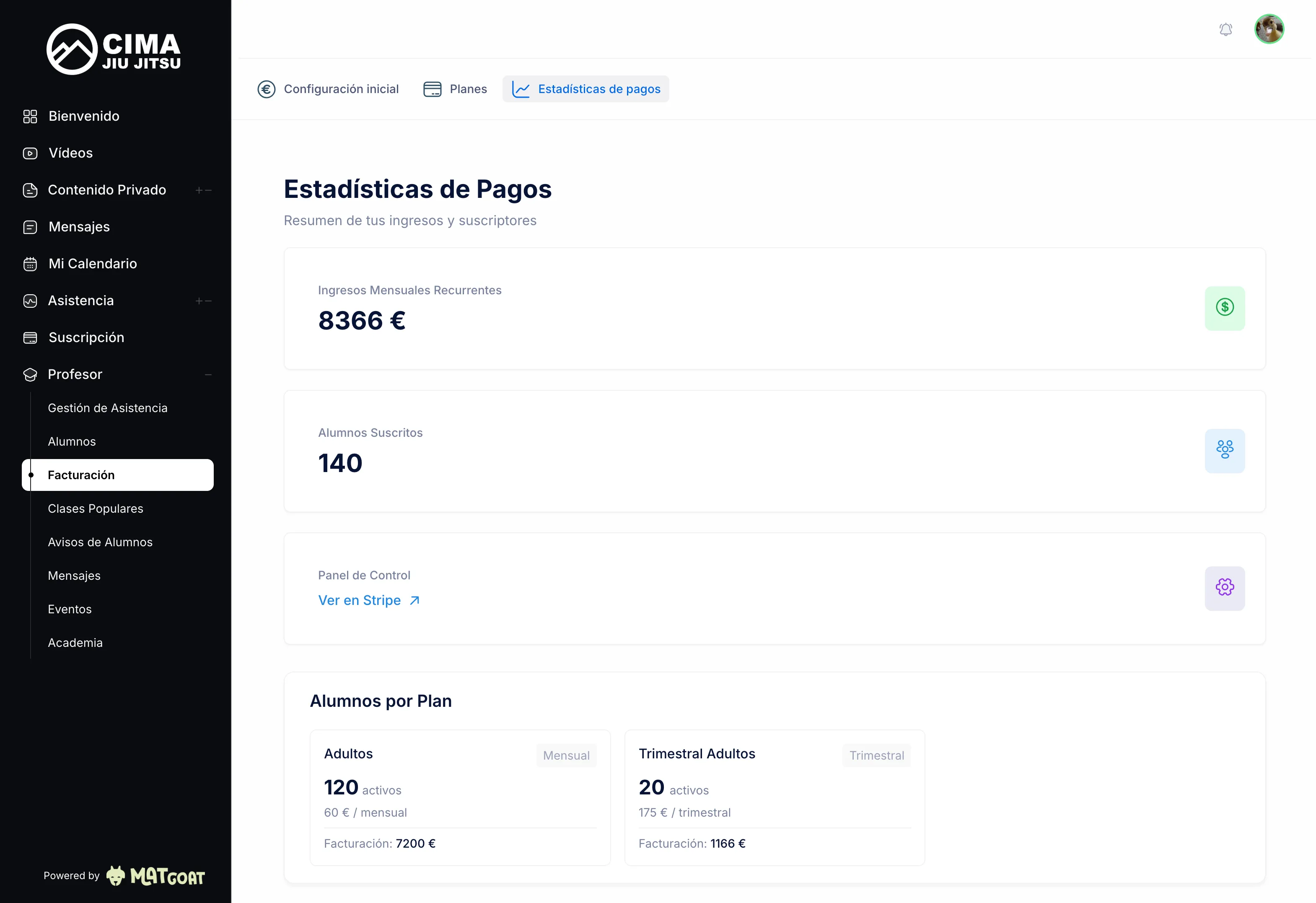
Chasing down late payments is one of the most uncomfortable parts of running an academy. Nobody gets into BJJ to become a debt collector. Good software automates recurring billing through credit card or bank transfer processing so you never have to have that awkward conversation. It should handle failed payment retries, send automated reminders for upcoming charges, and give you a clear dashboard showing who is current, who is overdue, and who has cancelled.
Look for flexible plan management as well. Most academies offer multiple membership tiers: unlimited training, two-times-per-week plans, kids-only memberships, family discounts, and drop-in rates. Your software should handle all of these without requiring workarounds or manual adjustments. Bonus points if it supports promotional pricing and trial periods that automatically convert to full memberships.
Class Scheduling
Your schedule is the backbone of your academy. Software should let you set up recurring class times, assign instructors, define capacity limits, and publish the schedule where students can see it. Some platforms offer student-facing apps or web portals where members can view the upcoming schedule and even reserve spots in popular classes.
The scheduling system should also handle exceptions gracefully. Holidays, seminars, instructor absences, and special events all disrupt the regular schedule. You need to be able to modify a single occurrence without changing the entire recurring series. The best tools also let you set up waitlists for classes that reach capacity, which is increasingly important as academies grow.
Video Technique Library
This is a feature unique to martial arts software and one that can set your academy apart. A built-in video library lets you upload technique demonstrations organized by position, belt level, or curriculum week. Students can review techniques before or after class, and new students can catch up on material they missed. This creates enormous value for your membership beyond just mat time.
Not every platform offers this, but the ones that do tend to see higher engagement and better retention. Students who watch technique videos between classes show up more prepared, progress faster, and feel more connected to the academy even on days they cannot make it to training.
Analytics and Reporting
Data-driven decision making separates thriving academies from ones that plateau. At minimum, you want reports on monthly revenue, student count trends, retention rates, and attendance patterns. More advanced platforms give you churn prediction, revenue forecasting, and cohort analysis that shows how different groups of students behave over time.
Pay attention to how the software presents this information. A dashboard with clean visualizations that you can check in thirty seconds is far more useful than a report builder that requires you to be a spreadsheet wizard. You want insights, not raw data. The best platforms highlight the numbers that matter and flag when something needs your attention, like a sudden drop in a student's attendance or an unusual spike in cancellations.
Communication Tools
Keeping students informed and engaged between classes is critical for retention. Look for built-in messaging that lets you send announcements to the entire academy, specific groups (like your competition team), or individual students. Push notifications, email, and SMS all have their place. The more channels the software supports, the more likely your messages actually get seen.
Automated messages are particularly valuable. A congratulatory message when a student hits an attendance milestone. A check-in message when someone has not trained in two weeks. A birthday greeting. These small touches make students feel noticed and valued, which directly affects whether they stick around long term.
How to Choose the Right Platform
Start by being honest about your academy's size and complexity. A fifty-student academy with one location and a straightforward schedule has very different needs than a two-hundred-student operation with multiple locations, kids programs, and a competition team. Overpaying for features you will never use is just as wasteful as choosing a platform that cannot grow with you.
Price matters, but total cost of ownership matters more. A platform that costs twenty dollars more per month but saves you five hours of administrative work is not expensive, it is a bargain. Factor in the cost of your time when comparing options. Also consider payment processing fees, which vary between platforms and can add up to a significant difference over the course of a year.
Test before you commit. Every credible platform offers a free trial or demo period. Use it seriously. Enter real student data, set up your actual class schedule, process a test payment, and see how the attendance tracking feels in practice. Involve your front desk staff or anyone else who will use the system daily. Software that looks great in a demo video but frustrates your team in practice is not the right choice.
Finally, consider the company behind the software. Are they focused on martial arts, or is BJJ just one of many verticals they serve? Companies that specialize in martial arts academies tend to understand the nuances better. They release features that actually solve your problems instead of generic fitness industry features you will never touch. Check their update history, read reviews from other academy owners, and see if they have an active community or support channel.
Making the Switch
If you are currently managing your academy with spreadsheets, paper sign-in sheets, or a generic tool that does not quite fit, the transition to dedicated software is one of the highest-impact changes you can make. The key is to approach migration methodically: import your student roster first, then set up your class schedule, then configure billing. Do not try to flip everything over in a single weekend.
Most platforms offer migration assistance and onboarding support. Take advantage of it. The time you invest in a proper setup pays dividends for years. And once the system is running, you will wonder how you ever managed without it. Your students will notice the improvement too, from smoother check-ins to better communication to a more organized experience overall.
The bottom line: dedicated BJJ academy software is not a luxury. For any academy with more than about thirty students, it is a necessity that pays for itself many times over in saved time, reduced churn, and better business decisions driven by real data.