BJJ Attendance Tracking: Methods, Tools, and Best Practices
Attendance tracking is the single most important operational habit a BJJ academy can develop. It touches everything: retention, revenue forecasting, instructor scheduling, belt promotions, and student satisfaction. Yet most academies either skip it entirely or do it so inconsistently that the data is useless.
This guide breaks down the three main approaches to tracking attendance at a BJJ academy, explains the real costs and benefits of each, and shows you why moving to a digital system is one of the smartest investments you can make for your school.
Method 1: Paper Sign-In Sheets
The paper sign-in sheet is where most academies start. A clipboard hangs near the door, students write their name and the date before class, and the instructor collects the sheets at the end of the week or month. It is simple, requires no technology, and costs almost nothing to implement.
The Case for Paper
Paper works when your academy is small. If you have twenty students and one class per day, you can probably keep track of everyone in your head anyway. The sign-in sheet is more of a formality, a record to back up what you already know from seeing the same faces on the mat every night. There is no learning curve, no software subscription, and no tablet to set up. Students who are not tech-savvy do not have to learn anything new.
Some academy owners also like the personal feel of paper. Students physically signing their name creates a small ritual, a moment of commitment at the start of each class. There is something to be said for that, especially in a discipline that values tradition.
Where Paper Falls Short
The problems with paper start the moment you try to do anything with the data. Want to know which student has attended the most classes this month? You are counting names line by line across multiple sheets. Want to know your average class size on Wednesday evenings? That is a manual tally. Want to identify which students have not trained in two weeks? You need to cross-reference the sign-in sheets against your full roster, by hand.
Paper also introduces errors. Students forget to sign in. Handwriting is illegible. Sheets get lost or damaged. There is no backup. And the data entry problem compounds over time. After six months, you have a stack of paper that no one is ever going to go back and digitize. All those potential insights about your academy's health are sitting in a box, completely inaccessible.
The biggest issue, though, is that paper cannot trigger action. Even if you notice that a student has not been around lately, you noticed it by memory, not because the system flagged it. By the time you realize someone has dropped off, they may have already mentally quit. Paper is a record of what happened. It cannot warn you about what is about to happen.
Method 2: Spreadsheets
The natural evolution from paper is a spreadsheet. Google Sheets or Excel gives you a structured grid where you can enter attendance data and at least run some basic formulas. Many academy owners graduate to this approach after a year or two of drowning in paper.
The Case for Spreadsheets
Spreadsheets are a meaningful upgrade over paper. You can count, sort, and filter. You can calculate monthly attendance averages, identify your most and least popular classes, and create charts that show trends over time. Google Sheets is free and accessible from anywhere, which means multiple instructors can enter data without passing around a physical clipboard.
For a technically inclined academy owner, spreadsheets can be surprisingly powerful. Conditional formatting can highlight students whose attendance has dropped. Pivot tables can summarize data by class type, day of week, or belt level. If you are comfortable with formulas, you can build a fairly useful tracking system without spending a dollar.
Where Spreadsheets Break Down
The fundamental problem with spreadsheets is that they require constant manual effort. Someone has to type in attendance data after every class. That person has to do it consistently and accurately, or the data degrades. In practice, what happens is that data entry falls behind. An instructor forgets to update the sheet after Friday open mat. The weekend seminar attendance never gets recorded. Monday rolls around and nobody remembers exactly who was at which class.
Spreadsheets also do not scale. At thirty students and two classes per day, data entry takes five to ten minutes per class. At a hundred students with six classes per day, it becomes a part-time job. The more complex your spreadsheet gets, the more fragile it becomes. One accidental deletion, one formula error, and your data integrity is compromised. There is no undo history for six months of manual entries.
The other major limitation is that spreadsheets cannot automate responses. You can see that a student's attendance has dropped, but the spreadsheet cannot send them a message. You can calculate that a class is underperforming, but you have to remember to check the spreadsheet regularly to notice it. Insights are only useful if they reach you at the right time, and spreadsheets require you to go looking for them.
Method 3: Dedicated Apps and Tablet Check-In
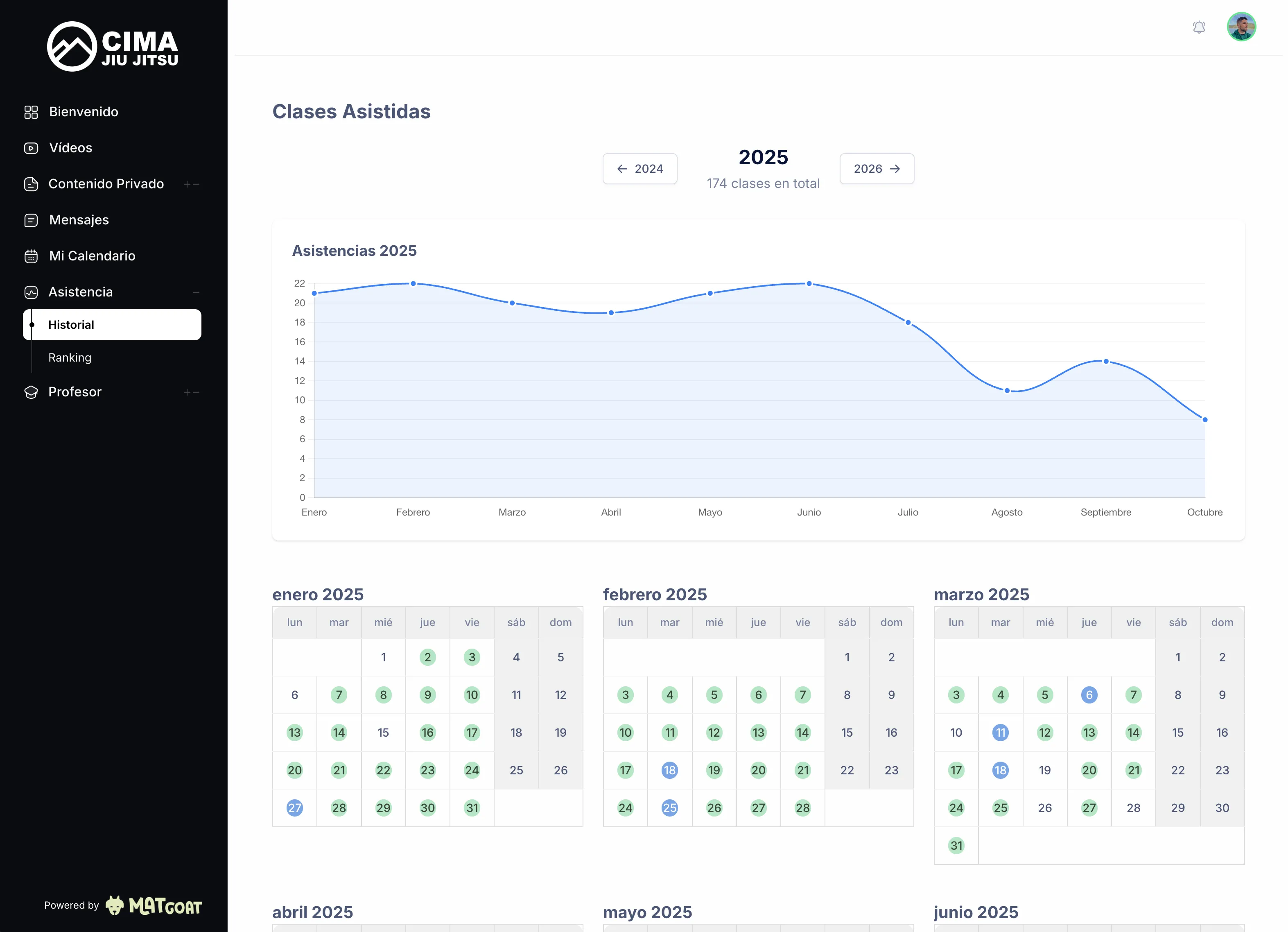
Purpose-built attendance tracking software, usually running on a tablet mounted near the entrance of your academy, is the gold standard. Students check in by tapping their name, scanning a QR code from their phone, or entering a PIN. The data is captured instantly, accurately, and automatically.
The Case for Digital Tracking
Digital check-in eliminates every manual step in the process. There is no data entry, no transcription errors, and no lag between when a student walks in the door and when their attendance is recorded. The data is immediately available in your dashboard, which means you can check class size in real time, see who is on the mat right now, and pull up any student's attendance history in seconds.
The real power, though, is in what happens behind the scenes. Good attendance software does not just record data. It analyzes it. It can flag students whose attendance has dropped below their usual pattern. It can identify which class times are consistently overcrowded and which have room to grow. It can show you seasonal trends so you can plan promotions during historically slow months.
When attendance tracking is integrated with the rest of your academy management software, the benefits multiply. You can correlate attendance with payment behavior to predict which students might cancel their membership. You can automate outreach to students who have not trained in a set number of days. You can generate accurate attendance certificates for students who need them for belt promotions or competition eligibility.
What to Consider with Digital Systems
The main barrier is cost. Dedicated software typically runs between thirty and one hundred dollars per month depending on features and academy size. You also need a tablet, which is a one-time expense of a few hundred dollars. For a new academy operating on a tight budget, this might feel like a stretch.
However, the math usually works out. If the software helps you retain even two additional students per month who would otherwise have quietly quit, the subscription pays for itself several times over. A single student paying a hundred and fifty dollars per month for six extra months of training represents nine hundred dollars in retained revenue, far more than the annual cost of most software subscriptions.
There is also a short adjustment period. Students need to learn the check-in routine, and you need to make sure the tablet is charged and functioning before each class. These are small inconveniences that resolve themselves within the first week or two. Most students actually prefer the digital check-in because it is faster and more reliable than paper.
Why Attendance Data Matters for Retention
Student retention is the number one financial lever in any BJJ academy. Acquiring a new student through marketing costs five to ten times more than keeping an existing one. Yet most academies have no systematic way to identify at-risk students until they have already cancelled their membership. Attendance data changes that equation entirely.
Research across fitness and martial arts businesses consistently shows that attendance frequency is the strongest predictor of retention. A student who trains three or more times per week has a retention rate above ninety percent at the twelve-month mark. A student who drops to once per week or less has a retention rate below fifty percent. The transition from regular to irregular attendance almost always happens before the cancellation, giving you a window to intervene.
With digital tracking, you can set up automated alerts that notify you when a student's attendance drops below a threshold. A simple message asking how they are doing, whether they are injured, or if their schedule has changed can be the difference between losing a student and keeping them. These interventions feel personal and caring because they are, but the system ensures they happen consistently instead of depending on whether you happened to notice someone's absence.
Attendance data also helps you design a better academy experience. If your fundamentals class averages forty students but your advanced class has only eight, that information tells you something about your curriculum progression. If weekend open mats draw more people than weekday evening classes, maybe you need to rethink your schedule. Every decision you make about your academy can be better informed by understanding who shows up, when they show up, and how often.
Best Practices for Academy Attendance Tracking
Whichever method you choose, these practices will help you get the most value from your attendance data.
Make check-in part of the culture. Announce the process, explain why it matters, and consistently remind students to check in. When tracking is presented as a way to improve the academy for everyone, students are cooperative. When it feels like surveillance, they resist.
Track every class and every open mat. Partial data is worse than no data because it creates false conclusions. If you only track your main evening classes, you will miss the students who primarily attend morning sessions or weekend open mats. Commit to tracking everything or acknowledge the gaps in your analysis.
Review the data regularly. Attendance data that nobody looks at is just overhead. Set a weekly or biweekly habit of reviewing your attendance dashboard. Look for trends, surprises, and students who need attention. Schedule this review like you schedule a class. It should not be optional.
Act on what you see. The point of tracking is not to accumulate statistics. It is to make better decisions and take timely action. When you see a student's attendance dropping, reach out. When you see a class consistently underperforming, investigate. When you see a time slot with growing demand, consider adding a class. Data without action is just numbers on a screen.
Celebrate milestones. Use attendance data to recognize consistency. A hundred class milestone, a year of training without missing a week, a personal best for monthly attendance. These celebrations reinforce the behaviors that keep students engaged and give you natural touchpoints for positive interaction.
Making the Transition
If you are currently using paper or spreadsheets and ready to upgrade, here is how to make the switch smoothly. First, choose your platform and start a free trial. Set up your class schedule and import your student roster. Mount a tablet near your entrance and introduce the new check-in process at the start of a class, walking students through it once. Within a week, it will feel natural.
Do not worry about historical data. While some platforms allow you to back-enter old attendance records, it is not worth the effort for most academies. Start fresh with clean digital data and focus on building the habit going forward. In three months, you will have enough data to see meaningful patterns. In six months, the system will be indispensable.
Attendance tracking is not glamorous. It does not make highlight reels or win competitions. But it is the quiet operational discipline that separates academies that struggle with churn from ones that steadily grow year after year. The best time to start tracking was when you opened your doors. The second best time is today.